



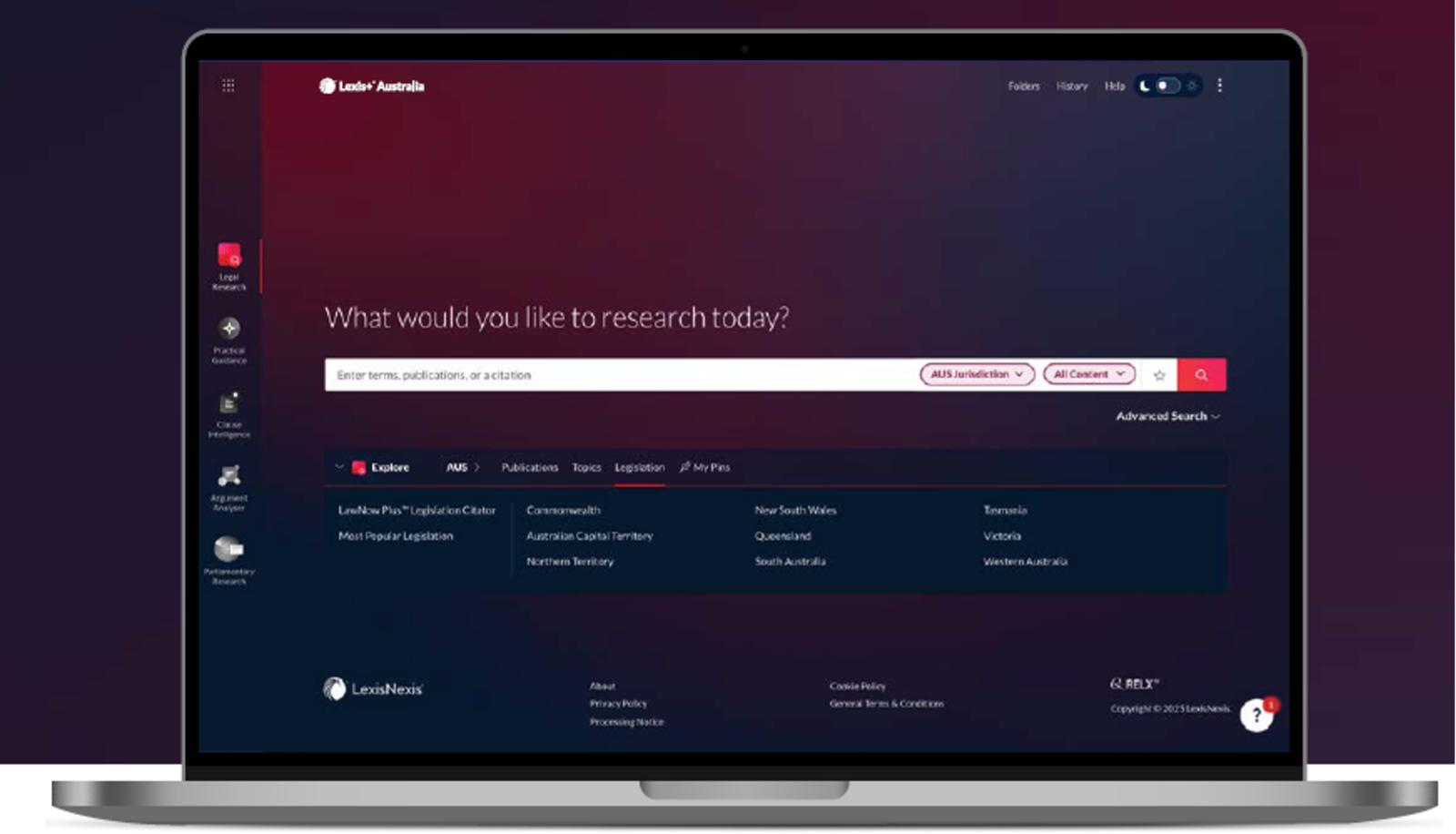

Changes to the ASX 24 Settlement Operating Rules and ASX Clear (Futures) Operating Rules were enacted following an ASX marketing notice and in response to consultation that proposed changes that relate to: the transfer of obligations for allocations, position limits and daily reporting of Open Positions from Trading Participants to Clearing Participants; and the five year review and refresh of the ASX Clear (Futures) Operating Rules and Procedures.
Customers will receive these changes as soon as they are confirmed by the ASX as going ahead. The updates will include changes to the following for the ASX Clear Futures Operating Rules: Contents, Parts 1, 2, 3, 4, 5, 6, 7, 7A, 8, 9, 10, Schedules, Procedures & Determinations, OTC Rulebook and OTC Handbook, which adds up to an approximate 455 pages of updates. For the ASX 24 Settlement Operating Rules, changes are to sections 1, 3, 4, 5, 6, and 7, which adds up to an approximate 190 pages of updates. The ASX requires that participants must review the amendments to ensure participants are complying with their obligations, and LexisNexis is proud to deliver these updates to customer as the official publisher.
The Australian Prudential Regulation Authority (APRA) released a Systemic Risk Outlook Report in late November 2025. This data-driven report sets out current and upcoming risks that will face Australia’s financial systems. APRA identifies three areas of focus: geopolitical environment, housing, and interconnectedness (particularly the growing role of superannuation). It also highlights operational threats including foreign interference, cyberattacks, and reliance on AI and digital infrastructure.
Vulnerabilities and shocks abroad affect many facets of the Australian financial system and these effects will be analysed in an updating article of Australian Risk Management. Subscribers will have access to timely insight into the prudential-regulator priorities which can allow them to anticipate any compliance expectations and proactively adjust governance, liquidity, and operational risk strategies in line with APRA’s supervisory direction.
The mandatory notification requirement (and most of the other substantive amendments) introduced by the Merger and Acquisitions Reform Act commenced on 1 January 2026. The notification requirement makes it mandatory for businesses to notify certain acquisitions to the ACCC. They must wait for ACCC approval before they can proceed. This new merger control regime represents a significant strengthening of Australia’s merger law.
The annotations to the Competition and Consumer Act which appears in both the publication of the same name and Practice and Procedure High Court and Federal Court have been extensively updated with explanation and analysis on the new merger laws by expert in the field and long-time author Ray Steinwall. This includes particularly useful new commentary on the process, assessment guidelines, lessening the competition definitions and factors for consideration. While the new law impacts the entirety of the legislation, see most notably sections 51 and 80.
The Australian Securities and Investments Commission published their Corporate Finance Update (Issue 26) in November 2025. The Update detailed the procedural change regarding Members' schemes of arrangement. With this change, ASIC is able to execute the role of reviewing scheme documents more efficiently, as it now engages with the process earlier. It assists ASIC in considering material issues within the scheme prior to the draft explanatory statement being lodged and in advance of the first court hearing.
Geoff Kerrigan (HSF) has updated the commentary to Chapter 24 (Corporate Reorganisation and Elimination of Minority Holdings) of Ford, Austin and Ramsay's Principles of Corporations Law. This update covers changes to this chapter over the last 8 years, including the most recent ASIC Corporate Finance Update. Kerrigan details the changes brought about by the Finance Update Issue 26 as well as providing a list of matters that may be raised by ASIC prior to the explanatory statement being lodged, including deal protection matters and any potential conflicts of interest. This update serves as an authoritative commentary to accompany the ASIC releases, assisting customers in being able to accurately apply the changes released by ASIC to real world situations facing their clients.
The Victorian Supreme Court recently handed down Marrogi v Secretary, Dept of Justice and Community Safety (No 1) [2026] VSC 4, a case which concerned the legality of strip searches conducted on the plaintiff prisoner within the prison environment, as well as whether or not access to various exercise yards in the prison constituted being "in the open air", as required by the Corrections Act 1986 (Vic). The Supreme Court held that the repeated strip searches were in incompatible with the plaintiff's rights to privacy and right to “humane treatment when deprived of liberty” under the Charter of Human Rights and Responsibilities Act 2006 (Vic), hence unlawful. The court further held that there must be “a rational reson for the search” , and that four of the six available exercise yards did not satisfy the requirement of being "in the open air" – what this phrase constitutes was not defined but the court identified a number of factors which would be relevant in assessment.
Jack O’Connor (barrister) has updated the annotations to ss 13, 22 and 32 of the Charter of Human Rights and Responsibilities Act (in the Human Rights Legislation guidecard) in Bourke’s Criminal Law Victoria by summarising the salient features of this decision as it applies to those sections, which deal with privacy, humane treatment when deprived of liberty, and interpretation. The decision was handed down on 19 January 2026 and the annotations discussing the decision published online within 6 weeks.
The NSW Parliament introduced two separate pieces of legislation relating to workers’ compensation reform in 2025-2026. The first was the Workers Compensation Legislation Amendment Act 2025, which received royal assent on 24 Nov 2025. It implemented significant changes to the Workers Compensation Scheme, particularly around liability and entitlements for psychological injuries, protections on bullying and excessive work demands, dispute pathways for these claims, updating impairment assessment procedures and weekly benefit limits, and changes to what is “reasonable management action”. The second, the Workers Compensation Legislation Amendment (Reform and Modernisation) Bill 2025, was passed on 4 Feb 2026 but has not yet received assent. It builds on the first Act especially with psychological injury entitlements, premium limits and return-to-work support programs.
Our publication Workers Compensation NSW follows the straggered reforms introduced by these amending Acts. Currently, our expert author (Nathan Bonello, Managing Partner of Turner Lawyers) is writing annotations and commentary on the first amending Act. He has inserted commentary about the changes within the Workers Compensation Act 1987 annotations and is working to bring updates to our subscribers as soon as there is new information. This is highly beneficial to our customers working in the area of workers compensation and personal injury, whether you are an employee/employer, or working in human resources and work policies; the changes to the workers compensation scheme will affect all parties.
In Voight & Zunino [2025] FedCFamC1A 201, the Full Court of the Federal Circuit and Family Court (Austin, Schonell and Curran JJ) delivered an important judgment clarifying the breadth of judicial discretion in financial matters. The Court reaffirmed that when determining whether a proposed property adjustment is just and equitable under the Act, the inquiry cannot be confined to the parties’ competing proposals. Instead, the Court must assess all relevant circumstances of the parties’ dispute and determine whether any adjustment, whether advanced by the parties or not, would meet the statutory requirement of being just and equitable.
Martha Barnett SC has updated the commentary to section 90SM of the Family Law Act 1975 (Cth) in Australian Family Law to include an analysis of the Full Court's decision in Voight & Zunino. This new commentary clarifies how Voight & Zunino has reset expectations around judicial discretion, interim orders, and the limits of party‑driven proposals in financial proceedings.
In November last year, the Australian Government introduced the Corporations Amendment (Digital Assets Framework) Bill 2025 (Cth) to Parliament, signalling a significant reform to the regulation of digital assets and tokenised products in Australia. Before now, the landscape of digital currency and fintech has been regarded with some trepidation by regulators, customers and financial services lawyers due to a lack of clear guidance from the government. This Bill, if enacted, will provide much needed clarity on the legally accepted definitions of core concepts such as 'digital tokens', 'digital asset platforms' and 'tokenised custody platform'.
Steven Rice, financial services specialist and partner at Corrs Chambers Westgarth, breaks down the proposed reforms in the latest issue of the Financial Services Newsletter 24.10. Customer's will appreciate the author's step-by-step explanation of the key changes relevant to practitioners in financial services. The article also situates the reforms within the existing regulatory framework, outlining how the new provisions will interact with familiar regimes like AFSL requirements, AML programs, and design and distribution obligations. An essential read for all practitioners in the practice area wishing to get a head start on any implementation projects.
On 10 December 2025, the decision in Bed Bath 'N' Table v Global Retail Brands Australia Pty Ltd [2025] HCA 50 was handed down. The High Court of Australia set aside judgment of the Full Federal Court and upheld an appeal by Bed Bath 'N' Table Ltd in a dispute concerning a competitor's use of a Mark. The decision is significant as the High Court upheld the reasoning of the primary judge in finding that Global Retail Brands Australia Pty Ltd's use of the Mark was a contravention of section 18 of the ACL, meaning that misleading or deceptive conduct was found even though Bed Bath 'N' Table's trade mark infringement claim was unsuccessful. The decision served as an important reminder that a competitor's use of a similar trade mark may breach the ACL even though it does not comprise trade mark infringement.
The Australian Intellectual Property Law Bulletin has been following the case closely, publishing an article in October 2025 by Natasha Burns, Deborah Jackson and Sophie Clapin (Allens) summarising and reflecting on the case ahead of the High Court decision. Following the High Court decision, we are set to publish a feature article in IPLB 38.1 authored by Glenn McGowan KC, Olivia Coburn and Tilly Dalton (Gadens). The piece will provide customers with an in-depth analysis of the background and primary judgment, the High Court decision versus the Full Court decision and how they differed, as well as key takeaways, practical implications and things that lawyers in the area should focus on going forward.
On 23 January 2026 the Queensland Court of Appeal handed down their decision in BYM v The Corporation of the Roman Catholic Archdiocese of Brisbane t/as Brisbane Catholic Education [2026] QCA 8, upholding the trial judge's dismissal of personal injury proceedings brought against the Archdiocese for alleged sexual assault perpetrated by a school groundskeeper employed by the Archdiocese in 1999.
Cameron Seymour, Partner at Mullins Lawyers, has prepared an update for Personal Injury Litigation Queensland under the Work Injuries guidecard discussing the case and its implications in determining where an employer can be found vicariously liable for acts by an employee.
There are an increasing number of Queensland litigants seeking to improve the value of their land in different ways by the imposition of a permanent easement pursuant to the newly commenced Property Law Act 2023 (Qld). Two recent Supreme Court cases have explored different factual paradigms that may lead to the success or failure of an application: Donskoi v Whitaker-Mead [2025] QSC 166 and Zagros Group Ltd v QE Family Pty Ltd [2025] QSC 309. These cases were similar in that the applicants had both been operating under informal consensual access arrangements for lengthy periods, but upon the change of ownership of the title, the informal arrangements were no longer recognised.
Professor Emeritus Bill Duncan of the University of Queensland has contributed an article to the Australian Property Law Bulletin outlining these cases and the factual requirements for the establishment of easements, particularly with reference to the new Property Law Act 2023, which came into force in Queensland during 2025. The comparison of these two cases provides practitioners with an extremely useful and illustrative way to distinguish factual scenarios in which an easement might be deemed necessary for effective use of land from those in which it might not.
Victoria’s Voluntary AssistedDying (VAD) framework, governed by the VoluntaryAssistedDying Act2017, has been in force since 19June2019. It allows eligible adults - Victorian residents living with a terminal illness, experiencing unbearable suffering, and with enduring decision-making capacity - to request and receive a prescribed life-ending substance. The process involves multiple safeguards, including two medical assessments, a written declaration, and a final request. On 18 November 2025, amendments were passed which will take effect in April 2027, following an 18-month implementation period. These amendments introduce several key changes: removal of the ‘gag clause’ prohibiting doctors from initiating VAD discussions, potential adjustments to residency and prognosis criteria, shortening the minimum gap between first and final requests, and expanding the administering practitioner pool to include nurse practitioners and registered nurses.
We are soon releasing a dedicated chapter on Voluntary Assisted Dying in the next service of Wills, Probate and Administration Victoria, authored by Hayley Hunter, an Accredited Specialist in Wills and Estates Law. Covering eligibility criteria, statutory safeguards, amendments to the Act, and practical guidance for estate planning professionals, it provides an indispensable resource for legal advisors navigating clients’ end-of-life decisions within Victoria’s evolving VAD regime.

- Concise Australian Legal Dictionary, 7th edition, available now
- Chisholm & Nettheim’s Understanding Law: An Introduction to Australia’s Legal System, 10th edition, available now
- Judicial Ethics in Australia, 4th edition, available now
- Dispute Resolution Skills and Techniques: Mediation Conciliation Facilitation, available now
- Australian Administrative Law, available now
- Australian Tax 2026, available now
- Understanding Taxation Law 2026, available now
- Business and Corporations Law, 6th edition, available now
- Criminal Law Elements, 8th edition, available April 2026
- Crime and Mental Health in New South Wales, 4th edition, available now
- Australian Uniform Evidence Law, 3rd edition, available April 2026
- Effective Legal Writing: A Practical Guide, 4th edition, available now
- QRC: Torts, 5th edition, available now
- Financial Agreements under the Family Law Act, 2nd edition, available now
- Family Law and Bankruptcy, 2nd edition, available March 2026
- QRC: Succession Law, 3rd edition, available now
- Wrongful Death Claims: A Practical Guide, 2nd edition, available now
- Australian Migration Legislation Collection, January 2026, available now

- Brookbanks & Skipworth, Psychiatry and the Law 2ed
- Keane & Carter, Judicial Ethics in Australia 4ed
- Eagle et al, Crime and Mental Health in New South Wales 4ed
- Black & Hanrahan, Securities and Financial Services Law 11ed
- Weinstein et al, Uniform Evidence in Australia 4ed
- Frydrych, Trustees’ Rights of Indemnity 2026


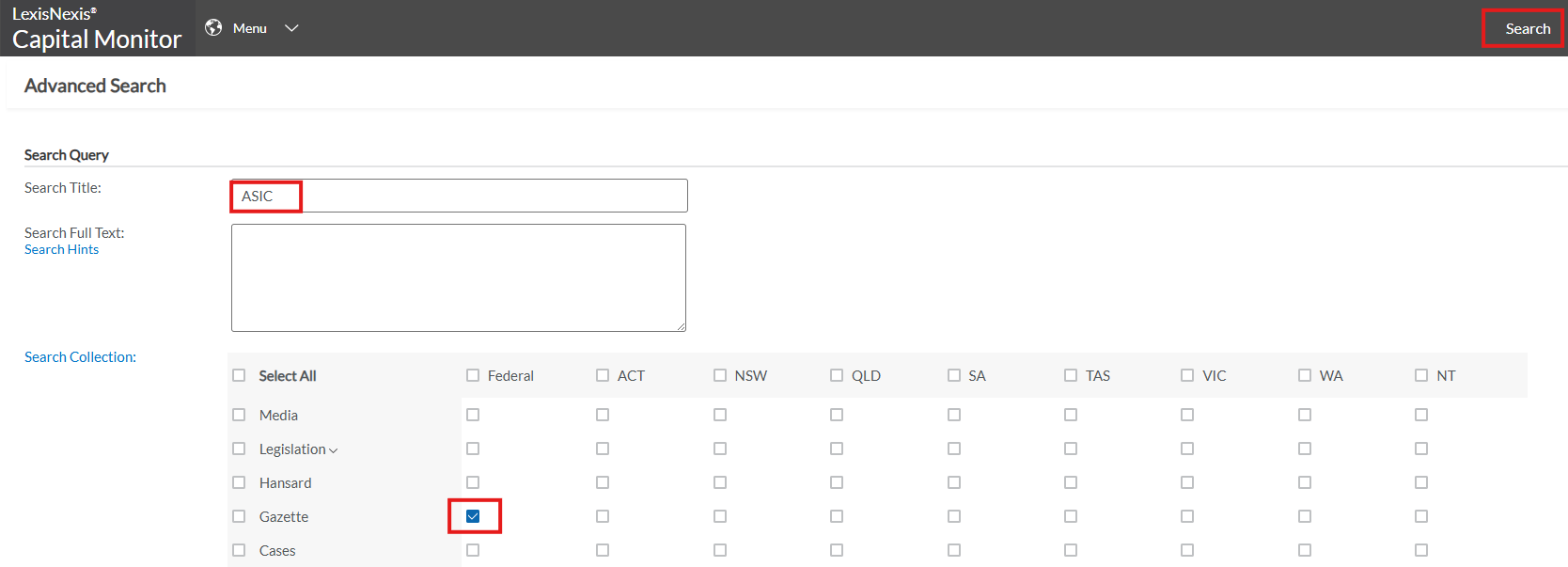
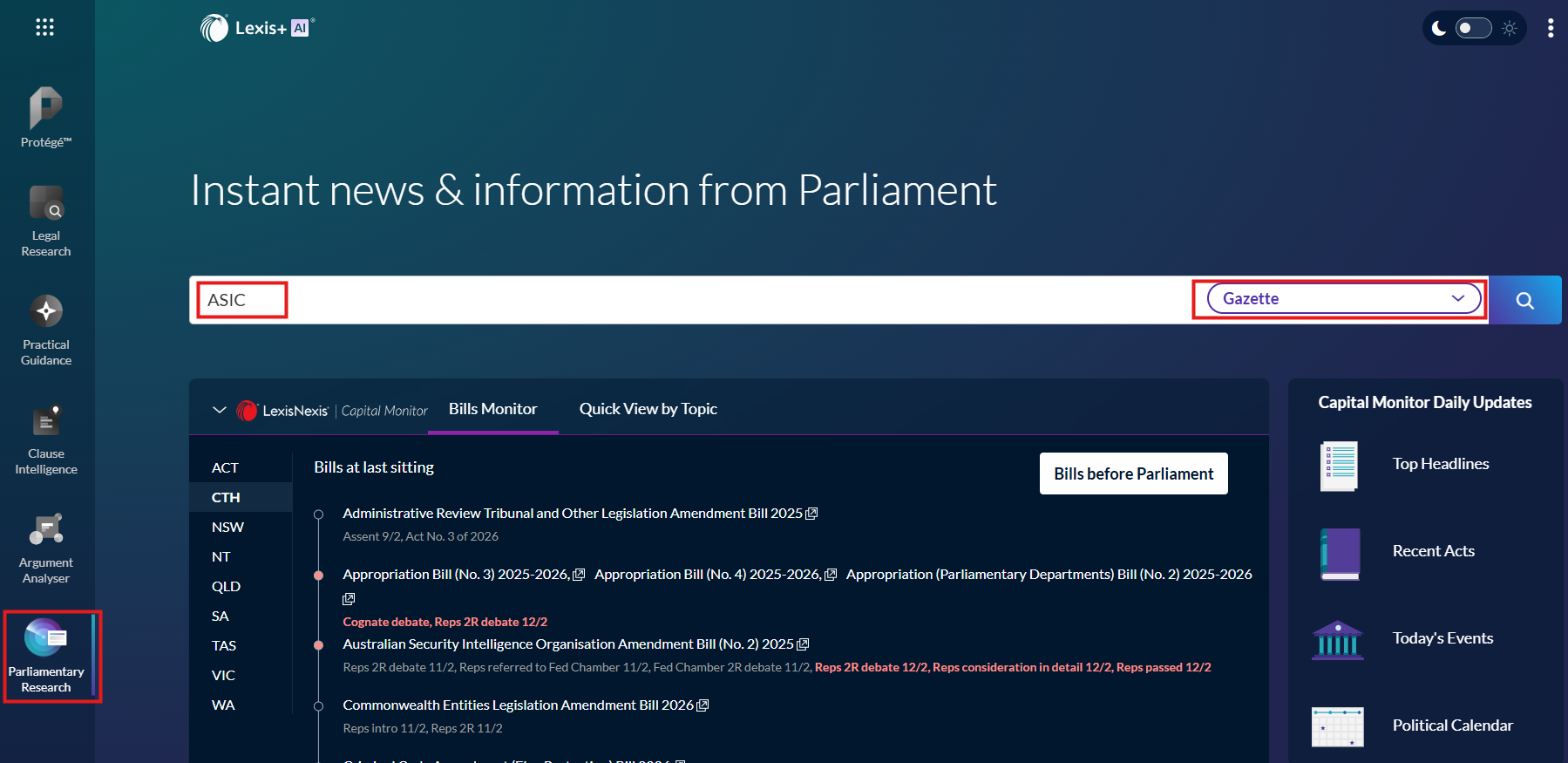
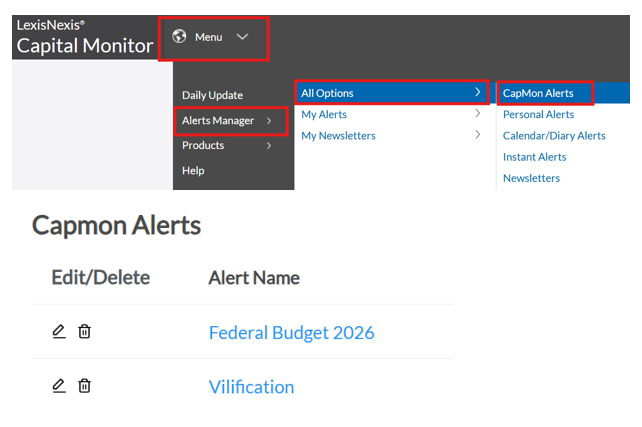
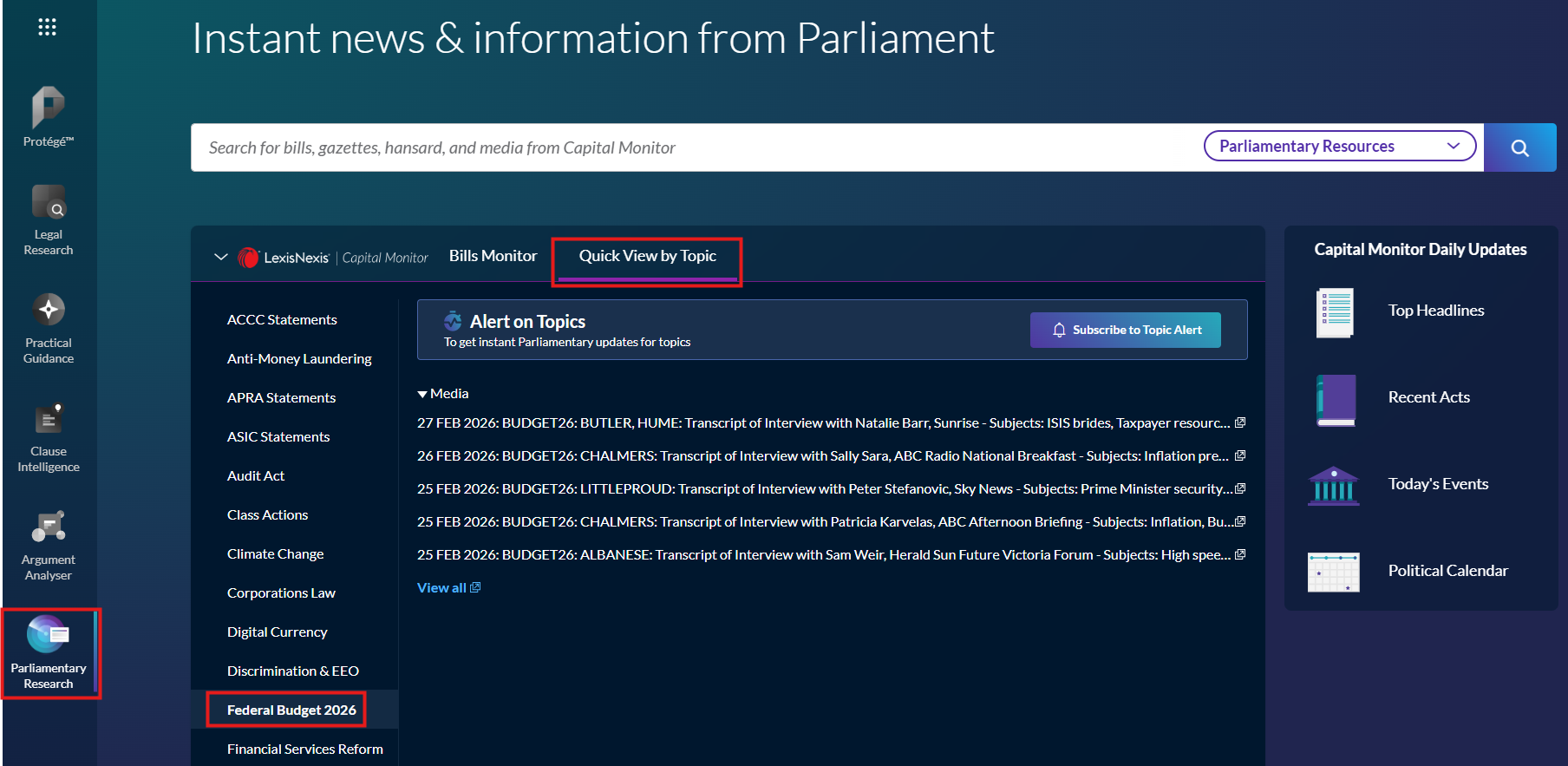
- Federal Budget 2026: Stay informed with expertly tagged, targeted content drawn from the full Federal collection.
- Vilification: Monitors ‘vilification’ and ‘hate speech’ terms across the full media collection, providing fast insight into emerging sensitive issues.

- Protégé™ is the legal generative AI assistant that works alongside you to deliver brilliant, personalised drafts. You can Ask, Draft, and Summarise, directly in your Word document.
- Easily identify trusted clauses and client-specific language to draft new agreements or contracts quickly, from your secure library so you can maintain your firm’s unique style.
- Generate new clauses and language while being assisted by the powerful generative AI and authoritative content from your LexisNexis subscription.
- Check for errors, omissions, and inconsistencies with tools that proofread, cross-reference, ensure number consistency, dollar amounts, and find legacy language and inclusive language.
- Polish, perfect, and secure your documents, scrub metadata, redact, and convert to PDF.
- Finalise your document, then send, sign, and track your agreements using the DocuSign integration.

- 18 stories filed in the LA trial (See Case File: Data Privacy & Security - Meta - YouTube - TikTok - Snap - Litigation in California state court alleging social media algorithms are addictive product (US) | MLex | Specialist news and analysis on legal risk and regulation)
- 21 stories from New Mexico (See Case File: Data Privacy & Security - Meta - New Mexico AG litigation over youth sexual abuse, mental health harm (US) | MLex | Specialist news and analysis on legal risk and regulation)

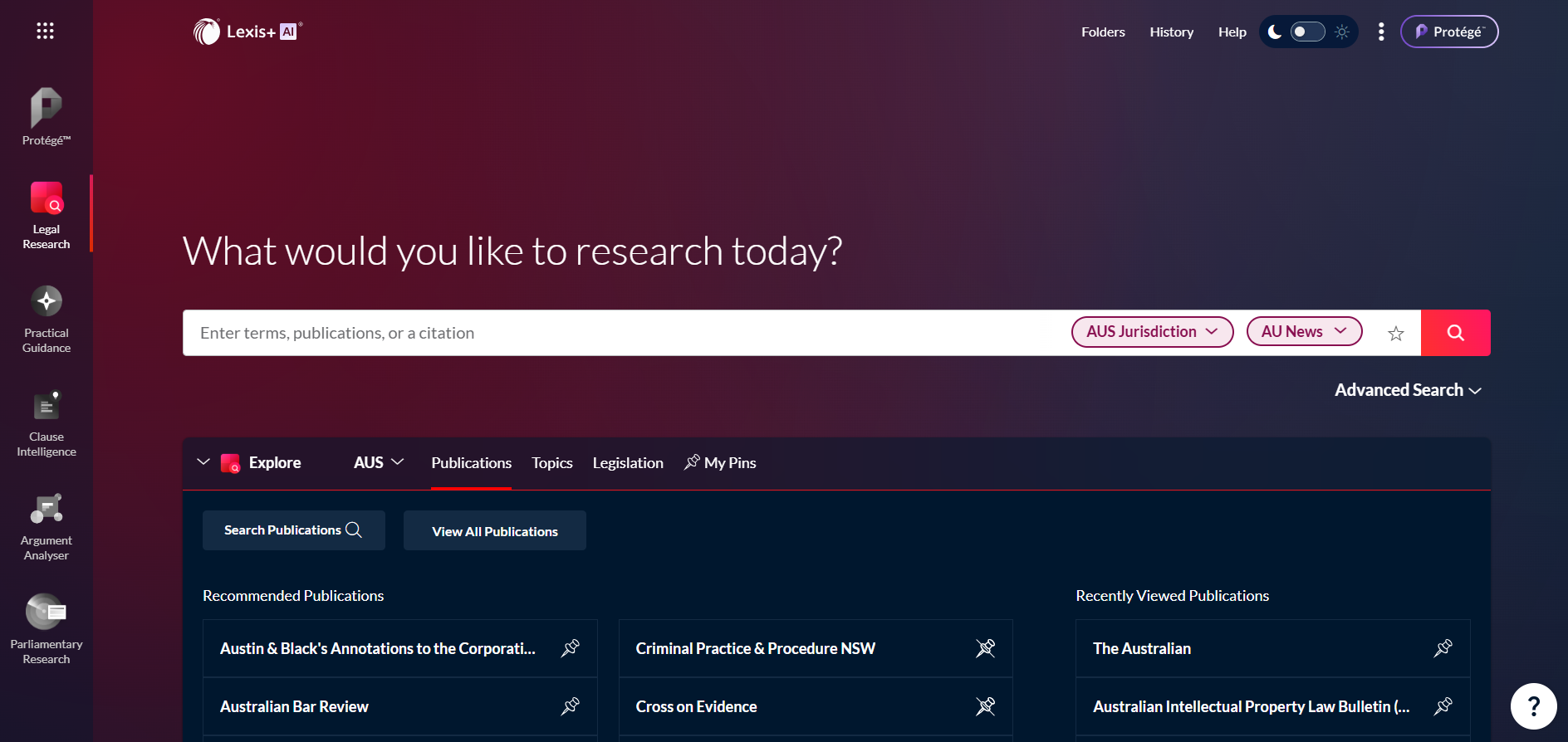
- VendingTimes.com
- VIQ Political Wire
- The Washington Spectator
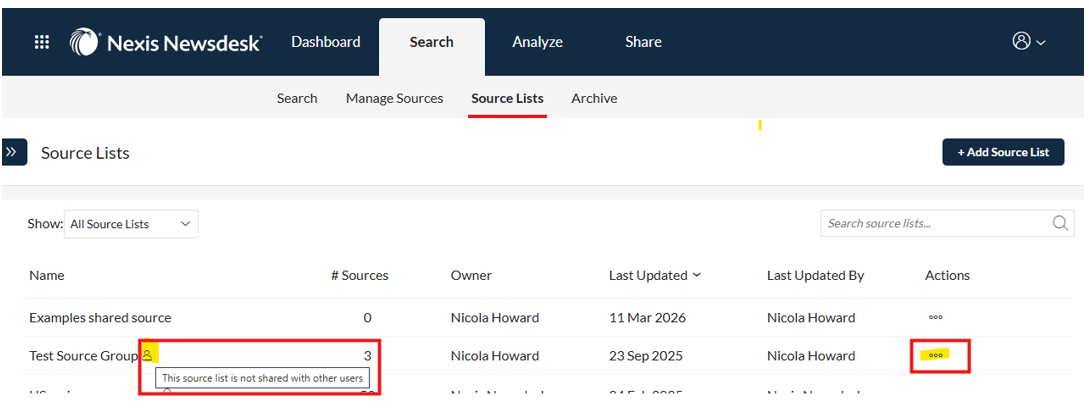
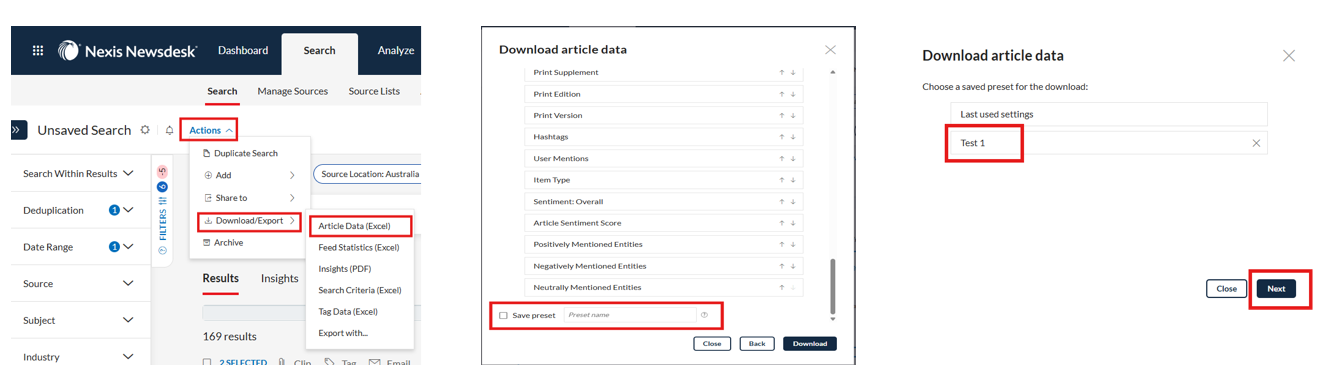
- In Newsdesk, go to Search > Manage Sources, search for the publication, and select Actions.
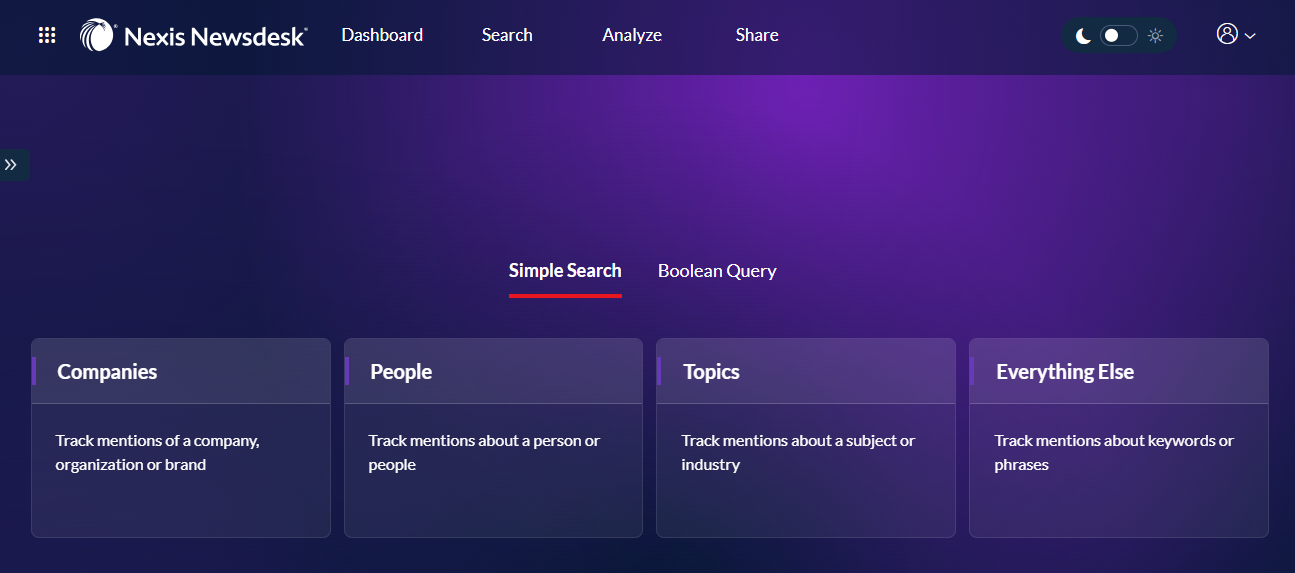
- In Lexis+, go to Legal Research > Publications > View All Publications, search for the title, and click the i icon.

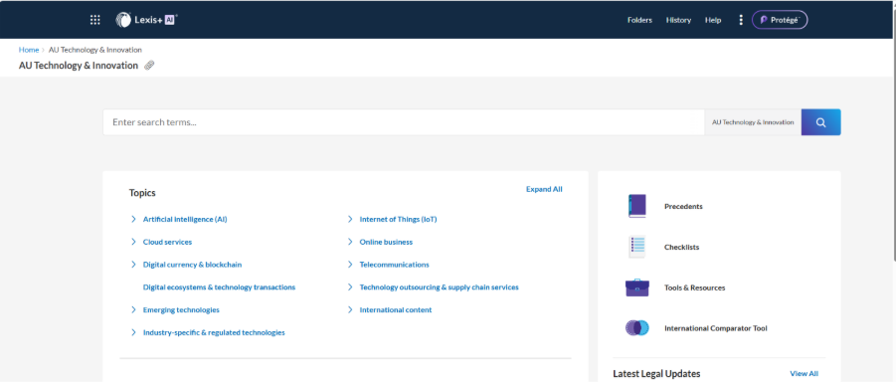
Practical Guidance Technology & Innovation is a how-to resource that provides issue and workflow-based guidance on the rapidly evolving legal considerations arising from existing, emerging and disruptive technologies. Covering core areas such as artificial intelligence, blockchain & digital Currency, internet of things, cloud services, emerging technologies and online business it equips practitioners with precedents, checklists, and expert guidance to navigate complex regulatory, transactional, and compliance challenges.
Suitable for lawyers at any experience level who advise clients in technology and innovation sectors, or clients adopting and implementing technology solutions, advising start-ups and supporting digital transformations as well as those handling traditional technology contracts and related advisory work. Learn more.
EVOLVED OFFERING: Practical Guidance Cybersecurity, Data Protection & Privacy
We are excited to announce that Practical Guidance Cybersecurity, Data Protection & Privacy has evolved to meet the demands of an increasingly connected world. With a new focus on cutting-edge cybersecurity and global privacy, it further empowers professionals to stay ahead of emerging regulations and risks. We have introduced a significant uplift in global privacy, data, and cybersecurity guidance, with brand new content and significant enhancements to key existing resources.
New Topic: Digital identity
This topic provides guidance on the Australian Government’s digital identity system including the regulatory landscape, how the system works, provider accreditation and trust marks, regulatory oversight, navigating and working within the system, the future of the system and digital trends.
New Topic: Cyber insurance
This topic provides guidance on the role and purpose of cyber insurance, cyber insurance legal and commercial risk issues and on emerging risks and market trends that are relevant to cyber insurance.
New Topic: Indian data privacy
This topic provides guidance on India’s Digital Privacy and Data Protection Act and its application to Australian organisations including reporting, enforcement, penalties and extra territorial application.
New Topic: UK General Data Protection Law (UK GDPR)
This topic provides guidance on the United Kingdom’s application of the General Data Protection Regulation (GDPR) including providing guidance on the key differences between the United Kingdom and European Union’s application of GDPR since Brexit.
Updated Topic: EU General Data Protection Law (UK GDPR)
This topic has been updated to provide specific guidance on the European Union’s application of the General Data Protection Regulation (GDPR) including providing guidance on the key differences between the United Kingdom and European Union’s application of GDPR since Brexit.
New Topic: US Data Privacy
This topic provides guidance on the California Consumer Privacy Act and its application to Australian organisations who are navigating the complex cross border operations of the US data privacy regime.
New Topic: Existing & Emerging technologies
This topic has been updated to have a cybersecurity, data protection and privacy focus with revised and enhanced guidance on relevant existing and emerging technologies.
New Subtopic: Cloud services
This subtopic provides guidance on cloud-computing and the commercial risks relating to privacy, data protection, data security, business continuity and disaster recovery that arise with cloud computing services.
New Guidance: Retention and disposal – practical implementation advice for digital environments
This guidance note provides guidance on the retention and disposal requirements for data in digital environments.
New Guidance: Privacy compliance of an online business
This guidance note provides guidance on the complex privacy compliance obligations that businesses may need when operating online as well as online-specific legal requirements across different locations and delivery methods.
New Guidance: Convergence of artificial intelligence (AI) and the internet of things (IoT)- cybersecurity & privacy implications
This guidance note explores the novel privacy and cybersecurity considerations that arise from the convergence of AI and IoT.
New Guidance: Security standards for smart devices
Smart devices or “relevant connectable products” are everywhere, from smart watches and health monitors to household appliances, laptops, industrial machinery and medical equipment. This guidance note explores the security standards that apply to smart devices.
New Guidance: How to handle crypto scams or fraud incidents
The growth in digital assets has brought about an increase in fraud and scam incidents. This guidance note explores immediate response, asset tracing and recovery, privacy and reputation management and prevention and future protection of crypto scams.
New Guidance: The Cyber Incident Response Board
The Cyber Incident Response Board (CIRB) is the first statutory body tasked with conducting reviews of cyber security incidents in Australia. This guidance outlines the roles and responsibilities of the CIRB.
New Guidance: Making a ransomware notification under the Cyber Security Act
The Cyber Security Act 2024 creates a mandatory obligation to report ransomware payments where certain threshold triggers are met. This guidance considers the reporting obligations and outlines best practice in making a ransomware report.
New | Subtopic: Covered bonds
New guidance on Australian covered bonds, including how covered bonds transactions are structured, documented and answers to frequently asked questions.
New and updated | Anti-money laundering and counter-terrorism financing reforms
New white label training materials to inform staff about AML/CTF obligations and what they need to know to help business comply with those obligations. New guidance on reforms including legal professional privilege and tipping off offence.
Coming soon | Anti-money laundering and counter-terrorism financing reforms
Guidance and checklists on AML programs, customer due diligence, privacy, reporting and outsourcing.
New precedents | New B2B supplies of goods and services precedents
Two new Consultancy agreement precedents from the perspective of the customer and consultant. Three new commercial clauses precedents covering tiered-pricing, volume-based discounts and non-compete clauses.
New precedents | New Distribution and logistics precedents
Two new Manufacturing agreement precedents from the perspective of the customer and manufacturer.
Coming soon| New topic: Current issues in commercial law
New topic on current issues in commercial law covering recent and upcoming reforms and modern slavery.
Coming soon | New guidance: Liquidated damages clauses
New guidance note and accompanying precedent on liquidated damages clauses.
New | Subtopic: The new mandatory merger control system from 1 January 2026
This new subtopic provides guidance on the notification process under the new merger review system, when a transaction needs to be notified, the substantial lessening of competition test under the new system and assessing whether a transaction will substantially lessen competition. It also contains a ‘snapshot’ guidance note providing an overview of the new system and a checklist for notification to the ACCC.
New | Guidance Note: Price gouging
This guidance provides an overview of the regulatory scrutiny of price gouging in Australia, the current legal landscape around price gouging and movements towards reform. It covers both consumer and competition law topics.
Coming soon | ACCC’s 2026/7 compliance and enforcement priorities
This new guidance provides information on the ACCC’s recently announced compliance and enforcement priorities for this year, along with commentary on how the priorities compare to the priorities for 2025/6 and examples of the ACCC’s enforcement of the priorities.
Coming soon | Ten top practice tips on the merger reforms for 2026
This new infographic will provide practitioners with the top practice tips they should be aware of for 2026, now that the new, mandatory merger system has taken effect. The infographic will be a useful, practical one pager that is easy to digest.
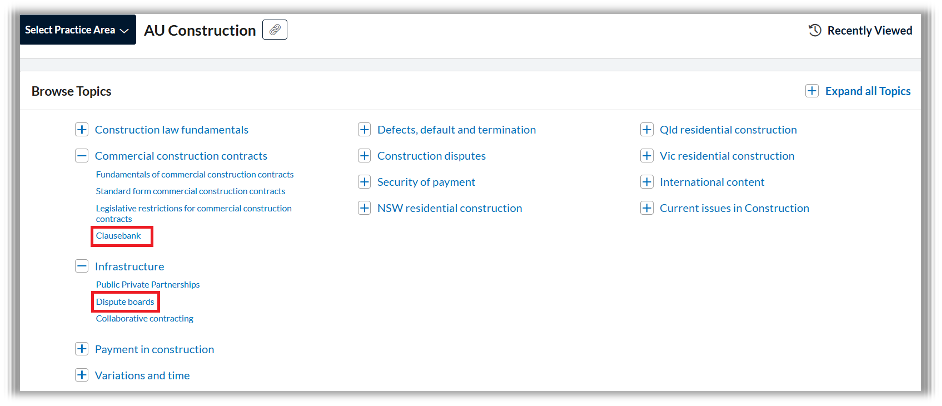
New | Subtopic: Clause Bank for Commercial Construction Contracts
This is a new subtopic aimed at assisting front-end construction lawyers in drafting and negotiating key provisions in construction contracts. The subtopic will feature guidance on drafting and negotiating indemnity clauses, limitation of liability and exclusion clauses, and latent condition clauses. Each guidance note will be accompanied by a complementary checklist and precedent designed to make drafting and reviewing construction contracts easier.
New | Subtopic: Dispute Boards
This is a new subtopic that provides guidance on dispute boards. The subtopic provides practical guidance on selecting and setting up dispute boards on infrastructure projects, including guidance on drafting dispute board agreements and dispute resolution clauses. Included in the subtopic are precedents such as Multi-contract dispute board agreement and Dispute board clauses in construction contracts.
New | Subtopic: Consumer law class actions
This new subtopic provides guidance on what is a consumer law class action, commencing and defending such proceedings, and negotiating settlements. Ensure that you have the steps covered before commencing proceedings by reviewing the Checklist for bringing a consumer law class action, and take preventative measures as an organisation by reviewing the Checklist for defending a consumer law class action.
New | Subtopic: Consumer law litigation
New subtopic with guidance on how to litigate the Australian Consumer Law, and draft pleadings in consumer law actions, including practical checklists on making a claim, defending a claim and drafting pleadings for misleading or deceptive conduct.
New | Subtopic: Gambling and wagering
New subtopic covering the legislative framework of gambling in Australia, including online and retail wagering, online lotteries and trade promotions, and land-based gambling.
New | Checklist of steps for boards to determine nature-related risks and take action under the TNFD
This checklist outlines directors’ duties to consider nature-related risks as part of the Taskforce of Nature-related Financial Disclosure framework. This is an emerging issue for directors as a failure to consider nature-related risks in the business means that directors could be found liable for breaching their duty of care and diligence.
Coming soon | AI tools in the boardroom
This guidance note considers the emerging practices around board and director use of AI tools and the risks and opportunities for deploying AI tools for directors and boards and outlines how directors can best use these tools themselves and in the boardroom.
Coming soon | Cheat sheet of key ASIC cases
This Cheat Sheet is a collection of key ASIC enforcement actions against directors for breaches of directors’ duties, continuous disclosure and governance compliance failures and provides practical tips on how to mitigate the risk of ASIC enforcement action.
Updated | Queensland – Youth Justice
Updated information on bail and sentencing, with new updated information on electronic monitoring to be included soon.
Coming soon | Victoria – Committal procedure
Updated guidance notes, precedents, checklists, form links and other information related to changes in committal procedure which commenced on 28 December 2025.
Coming soon| All jurisdictions
New and updated guidance notes and checklists to assist with assessing fitness to be interviewed.
New Guidance Note | SA — The use of generative artificial intelligence in South Australian courts
New guidance addressing the regulation of the use of generative artificial intelligence in South Australian courts, including the courts’ Guidelines concerning the use of Generative artificial intelligence in litigation in South Australian Courts, which commenced operation on 1 January 2026.
Coming soon | Topic: Administrative Review Tribunal (Cth)
New topic addressing practice and procedure in the Administrative Review Tribunal, which replaced the Administrative Appeals Tribunal when it commenced operations in October 2024.
Coming soon Precedent: Chronology of relevant events for inclusion in Part C of Appeal Book (Federal Court Rules 2011)
New precedent to assist practitioners with drafting a chronology of relevant events for inclusion in Part C of an Appeal Book in accordance with the Federal Court Rules 2011 (Cth) and applicable practice notes.
Updated Topic: County Court of Victoria
Topic-wide updates to reflect the procedural changes occasioned by the new County Court of Victoria Common Law Division Practice Note (PNCLD 1-2026).
Coming soon New topic: Workplace investigations
New topic covering end-to-end process and considerations when a practitioner conducts workplace investigations.
New | Topic: AI Governance
A new AI Governance topic will provide guidance on the development and use of AI systems, including identifying risks, implementing appropriate oversight, and ensuring compliance with emerging regulatory frameworks.
Coming Soon | Topic: Financial Institution Governance
A new topic will provide guidance for financial institutions by focusing on capable boards, clear accountability and well‑embedded risk and conduct frameworks. Through recent cases, it will also explain how gaps in oversight, controls or culture can lead to regulatory enforcement and reputational consequences.
Coming Soon | Enhanced Topic: Not-for-profit
New and updated content in an enhanced topic on not-for-profits covering detailed guidance on legal and regulatory framework, governance, financial reporting and dealings with the Australian Charities and Not-For-Profit Commission.
Coming soon | Flowcharts – Claims by bankruptcy trustees
These flowcharts set out in visual form the key elements of the main bankruptcy trustee claims. They will provide a helpful additional tool for a practitioner providing advice on claims or preparing them for filing with the court.
Coming soon | Updated and expanded small business restructuring guidance
This form of external administration is increasingly being used. To meet this change in the market, we have been and will continue to expand our guidance.
Coming soon | Training materials for bankruptcy
These training materials for bankruptcy, from a creditor’s perspective, will consist of PowerPoint slides and accompanying speaker notes.
Updated | Administrator appointments where there is a pending winding up application
Provides guidance when there is a pending winding up application on the appointment of administrators - swift action by the administrators is often required.
Updated | Creditors' voluntary winding up precedents
This is a complete set of precedents for directors wishing to place an insolvent company into liquidation.
Updated | Preparing and serving a statutory demand
Updated for the latest case law.
Updated | Subtopic: Artificial intelligence and IP
Updated guidance to help you keep up with rapid developments, including significant overseas changes. Clear and insightful guidance on IP and AI generated works explores if and how IP can protect these works. Guidance on Copyright infringement and AI includes an in-depth discussion of the recent rejection of the Text and Data Mining exception to the Copyright Act. Our guidance on Future Impacts of AI on IP Laws provides forward-looking insights addressing the uncertainties posed by new AI capabilities, while the guidance on international developments is a comprehensive review of overseas trends and shifts to ensure you are well-prepared for global challenges.
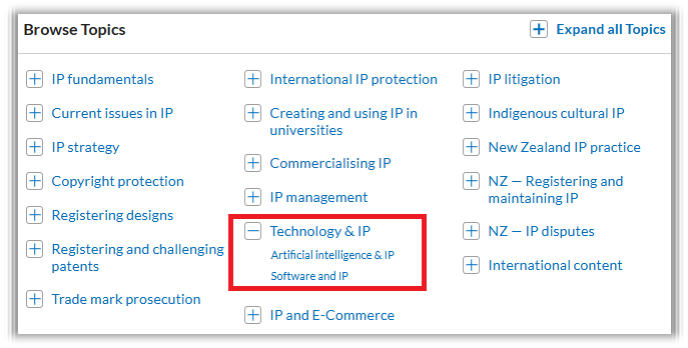
New | Subtopic: Patent litigation procedures
We have added a subtopic on Patent litigation procedures, that integrates into your practice:
- Step-by-step guidance: Detailed instructions on pre-action steps and demand letters, pleadings for infringement and case management will enhance your litigation readiness.
- Expanded Precedents: Our nine new precedents including demand/cease and desist letter, Statements of claims, and Defence/Revocation pleadings, are designed to save time and streamline your workflow by reducing repetitive tasks.
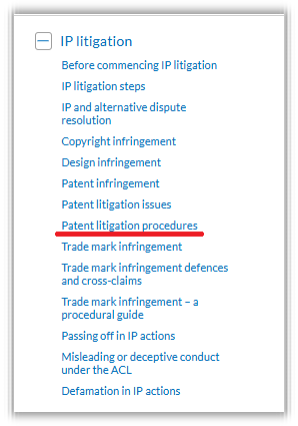
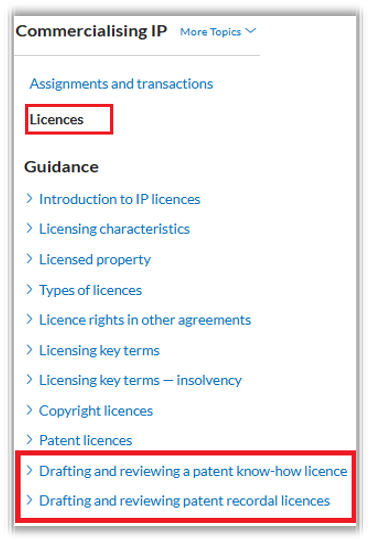
New | Guidance Notes and precedents: Commercialising IP
New detailed guidance in both subtopics on drafting patent assignments, reviewing licensing deals and a suite of precedents supporting patent transactions, to support rapid, informed decision making at every step.
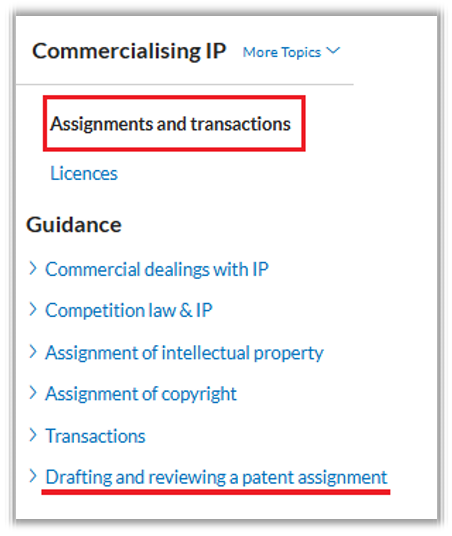
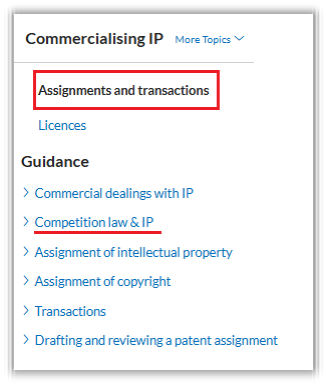
Enhanced | Guidance: Competition Law & IP
Navigate the new merger reforms with confidence, with clear guidance on their impact on IP, especially high value patents. Available under the Assignments and transactions subtopic, and the Current issues in IP topic.
Practice Area Highlight | Tracker – Australian Trade Mark Office decisions
The newly enhanced tracker features a column with delegate names and filtering options to help you quickly locate key decisions, improving daily practice and strengthening your legal arguments.
New Precedent | Simple agreement for future equity (SAFE)
A document used by Venture Capital / Private Equity to facilitate cash investment in a start-up company in exchange for future equity.
New Precedent | Convertible note deed poll
A document to set out the terms of a convertible note – a financial instrument used in Venture Capital / Private Equity allowing the noteholder to convert debt into equity on a trigger event or date, commonly used in startup companies.
Coming soon | Founder advisor standard template (FAST)
An agreement used in Venture Capital / Private Equity to allow a startup company and advisor to document agreed equity as consideration for the advice, based on the company’s maturity and the advisor’s engagement level.
New Precedents
Over 40 new precedents for both plaintiff and defendant solicitors have been uploaded across core personal injury – motor vehicle accidents, common law workers’ compensation, PIPA claims. New precedents include procedural letters requesting and disclosing evidence, compliance and liability responses, schedules of damages and sample instructions and briefs to Counsel.
New | National Disability Insurance Scheme
Our coverage of the NDIS (and in particular its implications for practitioners) has been updated to cover both plaintiff and defendant practitioner concerns. It also now includes guidance on the approach taken by the Administrative Review Tribunal and the Federal Court in considering disputes in this field.
Coming soon | New Coverage of Institutional Abuse law
A complete overhaul and expansion of our coverage of this growing area, taking account of the recently passed Justice Legislation Amendment (Vicarious Liability for Child Abuse) Act 2026 and the High Court decision in AA v The Trustees of the Roman Catholic Church for the Diocese of Maitland-Newcastle [2026] HCA 2. This includes updating the Coverage of the National Redress Scheme.
New | Topic: E-conveyancing
New topic covering e-conveyancing fundamentals like verification of identity, client authorisation and right to deal and other key e-conveyancing concepts. State and territory specific guidance is provided on common e-conveyancing transactions.
Coming soon | Precedents: GST special conditions
New special conditions covering different GST scenarios including GST inclusive, GST exclusive, going concern, margin scheme, farming business, and GST withholding, with optional penalties and adjustments provisions.
Coming soon | Subtopic: Deeds
Updated and expanded content on deed formalities, execution requirements for deeds by companies and by jurisdiction, and electronic execution of deeds.
New | Guidance on complex superannuation
New guidance on complex superannuation dealings, including conducting a business within a self-managed super fund, co-owning assets with related parties, financial assistance to related parties and borrowing and limited recourse arrangements.
New | Guidance on non-complying superannuation funds
New guidance on non-complying super funds including the consequences of non-compliance, common forms of non-compliance, disclosure of contraventions, rectifying non-complying funds and examples of non-complying superannuation funds.
New | Guidance on proposed Division 296
New guidance on what practitioners need to know in relation to Division 296 for high net worth estate planning. The guidance covers what the Division is, how it impacts large and very large superannuation balances, impact on self-managed super funds with multiple members, and practical considerations.
New | Guidance on Binding Death Benefit Nominations
New guidance on what are binding death benefit nominations, how to prepare them, how to use them, and guidance on their flexibilities and limitations.
New | Checklist for preparation of Binding Death Benefit Nominations
New workflow checklist assists practitioners in preparing a valid Binding Death Benefit Nomination in accordance with the provisions of the Superannuation Industry (Supervision) Act 1993 (Cth) and Superannuation Industry (Supervision) Regulations 1994 (Cth) and the relevant superannuation trust deed.
New | Guidance on dealing with advanced taxation issues in trusts for high net worth estate planning
This covers practical constraints in the application of trust loss rules and determining the tax residency of trusts.
New | Guidance on advanced taxation of trusts for high net worth clients
New guidance on advanced taxation of trusts including the importance of fixed vs non fixed trust and accessing CGT small business concessions and exemptions via trusts.
Coming soon | New guidance on informal wills
Due to growing litigation in this area, this topic will provide practitioners with guidance on dealing with informal wills including case examples and analysis.
Practice area highlight | Elder Law topic updated for Aged Care Act 2024 developments
The topic of Elder Law was updated in line with the new Aged Care Act 2024 which became operative on 1 November 2025. We have also created a podcast “The new Aged Care Act: What lawyers need to know” and blog post: Navigating the 2025 Aged Care Reforms: Implications for Lawyers and Older Australians.
Coming soon | New guidance on incident notification amendments
The new guidance note will cover the changes approved by Safe Work Australia on incident notification to the model Work Health and Safety Act.